
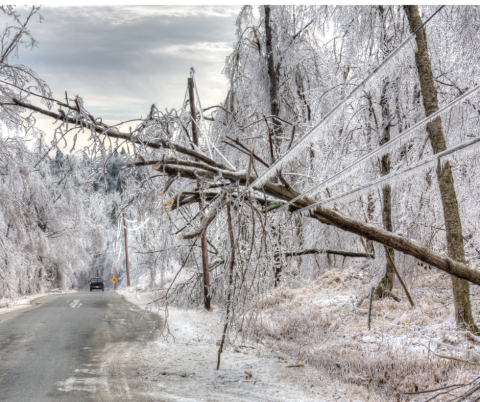
SDG COUNTIES, Ontario - Freeezing rain is a constant threat during the winter.
For a long-term power outage, preparation is key. Focus on safety, communication, and essential supplies to be self-sufficient for at least 72 hours, though longer is better.
Preparation (before the outage)
Build an emergency kit: Stock a kit with enough non-perishable food and 4 litres of water per person per day for at least three days. Include:
- Flashlights or headlamps and extra batteries (avoid candles due to fire risk).
- A battery-powered or hand-crank radio to stay informed.
- A manual can opener, first-aid supplies, and necessary medications.
- Cash in small bills (ATMs and debit/credit machines may be down).
- External power banks to charge cell phones and other small electronics.
- Warm blankets, extra clothing, and personal hygiene items.
Plan for medical needs: If anyone in your household relies on power-dependent medical equipment or refrigerated medications, consult with their doctor to create a backup plan, which may include a dedicated power supply or a list of alternate care facilities.
Consider alternative power/heat:
- Generators: A generator can power essential items like a refrigerator or medical devices, but it must be properly installed by a professional and operated outdoors, at least 6 metres away from windows and doors, to prevent carbon monoxide poisoning.
- Heating: A fireplace or wood stove can provide indoor heat if properly maintained and vented. For an electric furnace, a UPS (uninterruptible power supply) with a full sine wave function may power the controller and pumps for a period.
Protect your home:
- Install battery-powered smoke and carbon monoxide detectors.
- Insulate pipes to prevent freezing in cold weather.
- Learn how to manually open your garage door and shut off your home's main water valve.
- Keep your car’s fuel tank at least half full.
During the outage
Prioritize safety:
- Stay away from downed power lines and report them to your local hydro company immediately.
- Never use charcoal or gas barbecues, camping stoves, or generators indoors, in a garage, or near windows due to the risk of carbon monoxide poisoning.
- Use flashlights or battery-operated lanterns instead of candles to reduce fire risk.
Manage food and water:
- Keep refrigerator and freezer doors closed as much as possible. An unopened refrigerator will keep food cold for about four hours; a full, unopened freezer for about 48 hours.
- Use coolers with ice to keep essential items below 4 °C if the outage is prolonged.
- If you rely on a well pump, you may not have running water without backup power. Fill your bathtub with water for flushing toilets and have plenty of bottled drinking water on hand.
Conserve and stay informed:
- Unplug most appliances and electronics to prevent damage from power surges when electricity is restored, but leave one light on to know when power has returned.
- Limit cell phone use to conserve battery, and use a battery-powered radio for official updates.
- During cold weather, stay in one room, close doors to unused areas, and use extra layers of clothing and blankets.
- Keep busy with books, board games, and puzzles.
After power is restored
- Gradual restoration: Wait 10 to 15 minutes before slowly turning appliances back on to allow the system to stabilize. Turn on essentials first, like the heating system in winter.
- Food safety: Check food for spoilage. The general rule is: “When in doubt, throw it out.” Discard any perishable food that has been at temperatures above 4 °C for two hours or more.
- Check on others: Ensure vulnerable neighbours, friends, and family members are safe.